
Algae and Seaweed in the Inflation Reduction Act

The Inflation Reduction Act that was passed by Congress and Signed by President Biden last month has been hailed as a milestone in climate progress for the United States, especially for the aid that the new legislation will provide for technology development. Several provisions should be of interest to algae and seaweed producers and processors.

Improvement in Tax Credits for Carbon Capture: 

Some of the most exciting changes come to the section 45Q tax credit that can incentivize projects that capture and sequester carbon dioxide. ABO was an early supporter of this credit when it was first introduced, and we have been advocating for improvements we now see in the IRA. Some of those include: 

  • A multiyear extension of the commence construction window. The qualifying date for carbon capture projects has been adjusted to January 1, 2033. This new date will benefit potential algae and seaweed projects that need a more realistic timeframe to become operational. 
  • Enhanced values for carbon credits from direct air capture. Direct air capture (utilization) credits will now be valued at $130 per ton, making algae and seaweed projects even more attractive due to their unique ability to transform huge quantities of CO2 into biomass. Values for carbon storage and enhanced oil an recovery were also increased. 
  • Lower capture thresholds. The change to allow direct air capture projects as low at 1000 metric tons to qualify for this tax credit is especially interesting to early-stage algae and seaweed projects.. It should make investments in these projects much more attractive, and give them an opportunity to prove an approach that can eventually make a much, much larger scale.. 

ABO’s partner the Carbon Capture Coalition has an excellent breakdown of even more adjustments that IRA makes to the 45Q tax credit. 

This innovative tax credit is still in its early days, and we expect to learn as it begins to play a role in projects around the country. ABO will continue to work closely with industry stakeholders, carbon capture allies, and elected officials that are committed to building robust carbon capture technologies. 

For those interested in learning more about 45Q and how algae and seaweed projects can position themselves to take advantage of carbon credits be sure to check out ABO’s recent webinar on the topic. ABO members can reach out to get their free recording of the webinar. 

Accelerated Sustainable Aviation Fuels

Algae and seaweed can both be used to produce low-carbon, high-performing aviation fuels. Aviation stands out as one of the most difficult sectors to decarbonize, and new policies that can accelerate technologies like liquid fuels that come from sustainable biomass sources have been a longtime priority of ABO. 

The IRA includes a blender tax credit for sustainable aviation fuel (SAF) and a standalone investment tax credit for energy storage. Both of these are welcome news for SAF developers. Yet at the same time, the duration of the IRA’s incentives only run through 2027. This is much shorter than what will be needed for SAFs to scale up and become cost competitive with conventional jet fuel. ABO is hopeful that more policy windows will open to give SAFs the degree of support they need. 

For the latest on ABO’s position on sustainable aviation fuels be sure to read our recent op-ed in Biofuels Digest. 

Still a Need for R&D Support

These changes won’t take the place of robust R&D funding for SAFs, and they will likely need to be adjusted before we will see SAFs become more commercially available. However, the momentum is clearly in the direction that is needed. ABO will continue to support SAF policies that can accelerate the efforts of algae and seaweed scientists, project developers and investors. 

Get Involved

ABO is grateful for the support of its members and partner organizations that have helped make these important milestones possible. If you are ready to get involved with our efforts to support algae and seaweed as sustainable platforms for the future, be sure to become an ABO member and join one of our committees. 

And be sure to connect with our global network at the 2022 Algae Biomass Summit. See you there! 
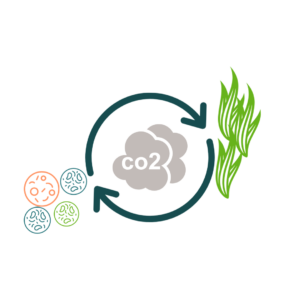
Webinar: Carbon Credits for Algae and Seaweed Production

Join Algae Biomass Organization members and other algae industry leaders for a webinar to explore the carbon opportunity!

Tuesday, August 2, 2022
10:00 AM – 11:30 AM PDT

Free for ABO members, $40 for non-members. Non-members that register will qualify for a $50 discount to the 2022 Algae Biomass Summit!

As governments, corporations and others seek ways to reduce their carbon footprints there has been an increased interest in the use of Certified Carbon Credits (CCCs), including CCCs tied to microalgae, seaweed, and kelp production. Algae and seaweed have long been touted as an excellent way to sequester carbon, but not many companies or producers are actively tracking and/or offering CCCs for purchase. There is no single system for tracking or selling CCCs, and getting started can be confusing. 

Join us for a webinar with CCC process experts John Pierce from Stroock & Stroock & Lavan LLP, and Tom Byrne from CarlsonSV to learn about how you can track and manage your carbon capture and participate in CCC markets. Presentations will be followed by a moderated Q&A.

Register here.

We’ll send a Zoom link to registered attendees at least 24 hours prior to the start of the webinar.

Speakers:

Thomas Byrne, CPA, CGMA, EDFP
CarlsonSV

Thomas Byrne, CPA, CGMA, EDFP, is a founding member of the Algae Biomass Organization (ABO) and one of the biomass industry’s most experienced financial and tax professionals. Tom currently is a Tax and Biotech Manager for CarlsonSV, LLP. He has been a certified public accountant since 1979 and has provided expertise in business structure, tax consulting, feasibility studies, financial modeling, business plan preparation, equity meetings organization, start-up management, and grant applications. In the past, Tom served as CFO and COO of a non-GMO/organic food ingredient processing company.

He has also led in the development of large-scale renewable biomass projects worldwide, including ethanol, algae, agriculture waste, biodiesel, and wind projects by coordinating the entire lifecycle of biofuels and renewable energy start-up projects from conceptualization to construction. Tom has also worked modeling and describing carbon credit projects in Africa, Mexico and the US. Tom has worked with the 45Q legislation for a number of years working with and though CarlsonSV, Algae biomass Organization and Carbon Capture Coalition.

Tom continues to serve as board member and Secretary/treasurer of ABO

John Pierce, Partner
Stroock & Stroock & Lavan LLP

John is a co-founder and former Chair of the Algae Biomass Organization.

He currently focuses his practice on the structuring, development and financing of energy and infrastructure projects.  He represents clients in connection with power generation projects fueled by an array of traditional, renewable, and unconventional energy sources.  John also works with carbon mitigating credits, offsets and trading structures, the creation of carbon trading protocols and markets, carbon sequestration, other environmental attributes and related market-based means to add value to certain energy projects.

His project counsel includes the development of utility-scale solar projects in the United States, the Caribbean, Southeast Asia, and Northeast Asia, including advising on the development and sale of seawater air conditioning system in Hawaii and the Bahamas, on the procurement and sale of the LNG for sale in China, working with a major Jones Act shipper on LNG procurement and supply for fleets serving Alaska, Hawaii, and Puerto Rico from Washington and Florida, counseling on the procurement of U.S.-originated LNG for consumption in Asia. John has recently advised on the development and financing of wind farms in West Texas, various wind and solar projects elsewhere in Louisiana, Oklahoma and Texas and PV solar projects in Texas, California, Arizona and Washington. He was primary counsel on a 1,000 MW offshore wind farm in Morro Bay, California, a 700+ MW offshore wind farm in Hawaii, similar offshore wind farm projects in Japan, Taiwan, Korea, and the Caribbean, a variety of PV solar and batter storage systems, the development of utility-scale solar thermal for steam injection projects in oil production fields, pump storage projects in California, Hawaii, Montana and Washington, as well as electric vehicle infrastructure and renewable hydrogen production technologies and projects in Texas, California, Washington and Iceland.

John has advised and structured various financings of energy and energy-related projects. Additionally, he has infrastructure project experience where he has counseled on the development of port facilities (bulk and container), airports, toll roads, terminals, refineries and associated pipelines, and industrial zones.

According to Chambers, “He is always very thorough, thoughtful and responsive on a wide variety of issues. He is well informed on renewable energy project finance matters too.”

He also advises several nonprofits in Southeast Asia working on refugee issues and human rights matters, and acted as counsel to Nobel laureate Daw Aung San Suu Kyi.

Register here.

ABO Welcomes 2022 Board of Directors

Dr. Martin Gross of Gross-Wen Technologies selected as new Board Chair, Mike LaMont of Heliae Development becomes Vice Chair. 

The Algae Biomass Organization (ABO), the US based non-profit trade organization for the algae and seaweed industries, today announced the election of their officers for their Board of Directors for the 2022-2023 term, as well as the Board of Directors members elected for the 2022-2024 term. Dr. Martin Gross, Founder and Chief Executive Officer of Gross-Wen Technologies was elected to serve as the new Board Chair, while Mike LaMont, Vice President of Operations at Heliae Development was elected as Vice Chair. 

ABO’s board guides the organization in its mission to promote the development of renewable and sustainable products from algae and seaweed, as well as the development of viable commercial markets for both. ABO supports people, companies, and organizations, as well as research, development, and commercial activities across the value chain.  ABO also educates the general public, policymakers and industry about the benefits of algae and seaweed in commercial and scientific applications.

The group announced today includes both new board members and re-elected members that will join current members that are already serving a 2021-2023 term. 

The newly elected board officers are:

Newly appointed board member:

  • Leslie Bellas – Federal Regulatory Affairs Manager, Neste

The re-elected board members are:

ABO’s full board of directors can be viewed at: https://algaebiomass.org/about/leadership/board-of-directors/ 

Put yourself at the forefront of the algae industry, where algae products, services, and research meet the challenges of our planet’s most pressing issues today.

BrightWave Brings Industrial Scale Algae Cultivation Indoors

From its headquarters in Maryland, ABO member BrightWave is combining elegant technology design with nature’s own carbon capture methods to make industrial scale algae cultivation more widely available than ever before. 

Aside from transforming industrial scale algae cultivation, BrightWave’s technology also delivers on two of the most promising potentials driving interest in photosynthetic algae today: meaningful carbon capture, and the production of high-value biofeedstocks that can replace petroleum-based ingredients. 

Next-Generation Bioreactors

BrightWave’s next-generation bioreactors address two of the most pernicious problems of current reactor operation: heat transfer and maintenance. The company has designed, developed and patented an in-water grow light that effectively removes the heat generated by the light and ensures it doesn’t affect the surrounding cultures. This lighting system is also integrated with an innovative and automated cleaning mechanism that sharply reduces the need for laborious downtime. 

With BrightWave’s technology, algae cultivation and carbon mitigation systems can now be scaled indoors and operate in any environment, ensuring that valuable resources such as land and water can be managed more efficiently. 

The closed environment of the BrightWave system ensures that large volumes of biomass can be produced to meet high standards for purity or other market specifications. And the ability to bundle PBRs also makes for new economies of scale that can apply to virtually any algae application, including carbon reduction projects sought by many organizations looking for cost-effective ways to meet ESG and net zero commitments. 

“A single one of our 36,000-liter PBRs can produce as much biomass as a one-acre raceway or pond,” said Tim Shaw, co-founder of BrightWave. “And we practically eliminate the risk of contamination and crashes.” 

Decarbonization and bioproduct capabilities that can serve critical global markets.

Perhaps the most consequential outgrowth of a cost-effective, scalable bioreactor system is what it means for the geography of commercial algae production. BrightWave’s internally illuminated bioreactor designs remove any limitation on bioreactor size. 

This flexibility opens new options far beyond algae cultivators. A manufacturing company can use a bioreactor array to capture emissions from its industrial processes (or via direct air capture), reducing airborne CO2 emissions as well as creating a new revenue stream from the marketable biomass that is produced. Alternatively, a vertically integrated global conglomerate can use the system to generate carbon credits throughout its value chain, flattening the ramp to decarbonization. 

The ability to produce high quality biofeedstock – indoors and virtually anywhere in the world – can also make supply chains more resilient in an uncertain global economy. Algae biomass has a market value that often depends on the strain that is grown, but new approaches are also turning that biomass into new materials like plastics or foams that depend less on strain and more on volume. In other cases, the algae itself can generate valuable chemicals or pharmaceuticals, which are then extracted from the biomass and marketed to customers. 

BrightWave is currently making its cultivation and decarbonization technology available for organizations seeking to reduce their climate risks, build supply chain resilience, and meet ESG goals as efficiently as possible. For more information visit: http://www.brightwavellc.com/

How Algae-C’s Platform Technology Delivers For Pharmaceuticals, and Gives a Boost to Algae Producers

Headquartered in Ontario, Canada, Algae-C is using algae as a biomanufacturing platform to produce key ingredients for the pharmaceutical and other industries, as well as biomass that is valuable for feed, food and energy markets. It is a breakthrough approach that brings together the unique biological advantages of algae with the diversity of production capacity in the expanding global algae industry.

A new kind of flexibility, and precision, for pharmaceutical production

Last year, Algae-C joined the Algae Biomass Organization as a Bronze member, a new membership category for companies preparing to make big impacts in algae and seaweed markets. Today, Algae-C is ready to make its impact, and is currently targeting the multi-billion dollar market for plant-based active pharmaceutical ingredients (APIs). 

APIs often have to be made with expensive and time-consuming chemical synthesis. In many cases, they are only available from a few international sources, making them vulnerable to the supply chain disruptions that have recently been on the rise due to political uncertainty, the COVID-19 pandemic, economic slowdowns and regional conflicts. 

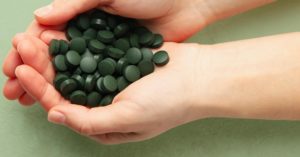
algae pills in hand

Algae-C’s technology addresses these challenges with its ability to reprogram algae to create designer strains that can produce high-value, plant-based API’s. It’s a process that can be done economically, sustainably, and anywhere in the world.

The company’s approach starts with identifying which genes in a plant are responsible for producing a specific molecule , such as a pharmaceutical ingredient. Those genes are then inserted into a strain of algae, which is consequently grown under careful conditions and monitored for quality and stability. 

The algae are then allowed to grow, creating biomass that contains the target molecule. Once the required volume of biomass is reached the algae are harvested and the target molecule can be extracted, purified and prepared for delivery. 

“Our approach uses the best of current algae production methods and modern synthetic biology techniques in  a single platform to produce  high value molecules,” said Dr. Mather Carscallen, chief executive officer of Algae-C. “With this approach, we can address many of the bottlenecks that all too often limit API manufacturing.”

In fact, the molecules produced  aren’t limited to APIs for the pharmaceutical industry, but can also be utilized in the personal care, nutritional, and many other markets. There are even novel molecules never before seen that this technology could quickly bring to mass production.

The high purity and customization that is possible puts the Algae-C process at a clear advantage over many current chemical synthesis techniques, especially when it is combined with the low-cost and sustainable production aspects of algae cultivation. 

Why algae are particularly well suited for pharmaceutical production

Algae have some unique advantages over other organisms like terrestrial crops, or even other microorganisms, when it comes to using synthetic biology in chemical production. Perhaps one of the largest comes from algae’s natural ability to produce high-value molecules: They require up to 85% fewer modifications in comparison to yeast or bacteria when the target molecule is plant-based. 

When it comes to inputs like water and nutrient supplies, algae have the flexibility needed to be deployed in almost any location in the world. And since algae can absorb carbon dioxide as they grow, rather than produce it like many yeast and bacteria, they can fit more easily into supply chains that are under tremendous pressure to decarbonize. 

Algae-C lists a number of the advantages of their technology for API production: 

  • 95% reduction in production cost (avg.)
  • Consistent, high quality yields
  • Faster development of new molecules
  • 90% lower environmental footprint
  • 99% water recycling
  • CO2 sequestration from the atmosphere
  • Zero waste with biomass reuse or recycling

A Platform That Offers New Opportunities for Algae Producers 

The model that Algae-C is using for commercialization involves building partnerships with  algae producers worldwide These partners have found that Algae-C’s methods and strains can be quickly adapted to a wide range of bioreactor or outdoor algae cultivation operations. 

This partnership model means that Algae-C is not positioning itself for vertical integration, but instead seeks to leverage the expertise and infrastructure that is already in place in the global algae community. They achieve this by breaking down their market strategy into a few simple steps. 

  1. Identify a product: Algae-C’s staff and customers identify novel or existing molecules of interest, with special attention on those that are plant-based. They also confirm the market for the molecule as well as efficacy studies about its potential. 
  2. Confirm the biology: Algae-C’s R&D team then transforms an algae strain to produce the target molecule. Testing is conducted to confirm that as an algae culture grows the production of the target molecule expands. 
  3. Coordinate commercial production: Algae-C works with its partner algae cultivators to confirm that the volumes produced can meet the relevant commercial scale. This can be anything from a few kilograms to tons of biomass. 
  4. Deliver a product: Algae-C’s partners  with local access to the relevant market begin production. The extracted high-value molecules are made available to pharmaceutical partners, and biomass that remains from the extraction process can be sold into markets for animal feed, fertilizers or other established markets. 

A platform technology can be a force multiplier for accelerating the growth of the algae industry

This platform technology approach has great potential when it comes to boosting the broader algae industry. Algae-C’s model can ensure that a production base, or any single producer, is never overextended. Collaborations ensure that the production of a particular molecule  can be quickly and reliably achieved with an economic and sustainable profile that is  ahead of other methods. The ability of Algae-C’s partners to take advantage of additional revenue streams that come with marketing the leftover biomass offers another market pull for more investments in production capacity. 

As Algae-C and other synbio companies use algae to deliver more products, those algae producers that are deploying photobioreactors, open ponds and fermentation methods will  find more opportunities. It may be a landmark step in the journey that advanced algae technologies are on as they become mainstream production methods for a new generation of sustainable products. 

Learn more about Algae-C at: https://algae-c.com/our-technology/ 

Photo by Atlas – stock.adobe.com