Four student scientists were recognized with the Algae Biomass Organization’s Young Algae Researcher Awards for their contributions to fields of algae biology and engineering at the 2019 Algae Biomass Summit, held in Orlando, Florida, September 16-19.
The awards are presented at the annual conference to recognize outstanding research projects by early-career scientists that are discovering the potential for algae to address a number of challenges in energy, human health, climate change, agriculture and more.
A panel of judges evaluated posters based on six key criteria: presentation, methodology, data analysis, poster integrity and the presentation of the poster by the presenter him or herself.
This year’s winners are:
1st place:
Jackie Mettler, University of New Mexico
Poster title: Promoter Library Curation to Improve Genetic Engineering Efforts on an Industrially-Relevant Alga
2nd place:
Karolína Ranglová, University of South Bohemia, Czech Republic
Poster title: Biostimulant and Biopesticide Activity of Chlorella sp. Cultured in Pilot Scale
3rd place:
Haixin Peng, Auburn University
Poster title: Effects of Azospirillum brasilense on Microalgae UTEX 2714 and Bioproduct Production
Honorable Mention:
Farah Naaz, Centre for Rural Development and Technology, Indian Institute of Technology (IIT)
Poster title: Comparative performance evaluation of synthetic media grown algae and wastewater grown algae on the basis of biocrude yield
Congratulations to each of these scientists! Their innovations are building the foundation for the technologies, products and companies of tomorrow.
The 2019 Algae Biomass Summit concluded last week in Orlando, and the takeaway for most attendees was that a wide range of technical and commercial breakthroughs have given algae a firm toehold in dozens of new markets around the globe, with many more to come.
Who Was There?
Hundreds of scientists, entrepreneurs, CEOs, business development executives, federal agency leaders, and others interested in taking advantage of the algae opportunity attended the Summit. They traveled from 23 countries, and represented 318 companies, universities and government agencies. Many came looking for an introduction to algae and left as full-fledged Algae Biomass Organization members, ready to leverage a new network of expertise and connections.
Some of the Big Ideas
Our summary of the Summit’s opening day featured contributions from Cornell University’s Dr. Charles Greene on how algae is unmatched when it comes to addressing global sustainability challenges, as well as a panel from leading food companies that are using algae to meet the growing demand for greener, healthier and better tasting products.
On day two of the Summit plenary panels addressed other aspects of algae’s future impacts. A discussion of algae’s ability to capture carbon from power and industrial emissions focused on the ABO’s efforts to ensure that algae was included in a recently amended tax credit program, known as 45Q, for carbon capture projects. The tax credit has attracted attention across the energy industry.
“45Q has really motivated the industry, a number of projects are underway as a result of this incentive,” said John Litynsky, Deputy Director for Advanced Fossil Technology Systems in the Department of Energy’s Office of Fossil Energy.
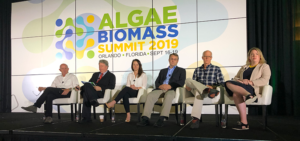
An afternoon panel titled “Hot Megatrends: Voices From the Field” featured leaders in media, advanced materials, food and algae cultivation discussing how far the industry has come, and how far it can still reach.
Scott Lindell, a research specialist at Woods Hole Oceanographic Institution noted that even with the remarkable potential of land-based microalgae production, there are also vast offshore resources for macroalgae farming. “The oceans are the largest untapped growth opportunity for algal biomass,” he said.
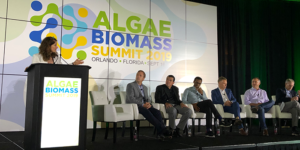
The Hot Megatrends panel at the 2019 Summit
At an evening reception attendees were treated to an exclusive sampling of algae-based foods from ALGAMA, as well as samples of algae cooking oil from Thrive, Omega-3 supplements from iWi, and dozens of other exhibitors.
First Hand Technology Experience
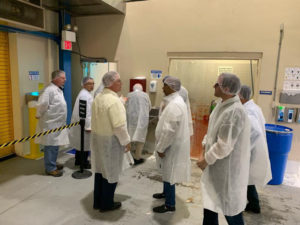
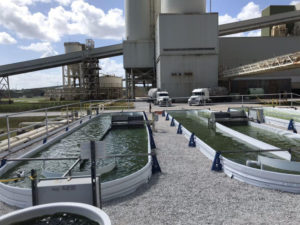
The Summit closed with two tours of regional algae technology demonstrations. At Valensa International attendees were treated to a lab tour that featured the company’s supercritical CO2 biomass extraction technology. And at a tour of the Orlando Utility Commission’s Stanton Energy Center, attendees saw a Department of Energy sponsored demonstration of algae cultivation using CO2 feedstocks from power production.
Algae cultivation with carbon capture at the Orlando Utilities Commission’s Stanton Energy Center.
Social Media Buzz
Throughout the event attendees were busy on social media posting about sessions, food samples, tours, nightlife and more. Scroll through some of the Summit action on Twitter via #algae2019.
The buzz at the 2019 Summit was stronger than ever before, and attendees from a wide range of companies, government agencies, research institutions and universities made connections that will help move initiatives forward across the globe.
The 2020 Summit will be held September 8-10 on the campus of the University of California, San Diego. The city is a hub of algae commercial and research activity, and the intimate campus setting is expected to make the networking, partnership-building and technical exchanges at the 2020 Algae Biomass Summit better than ever. See you there!
The Future of Algae for Food & Feed (FAFF) initiative was created as an engine for innovation and collaboration to accelerate the development of cost competitive algae-based food and feed products in the global marketplace
FAFF works to facilitate the development of products that will encourage consumers to make sustainable food choices through three strategic initiatives:
RESEARCH AND DEVELOPMENT
REGULATORY SUPPORT
EDUCATION AND MARKETING
Join Us for Our 2019 Fall Webinar Series Presented in Partnership With:
Webinars include:
Food and Dietary Supplement Regulations: Application to Algal-based Ingredient Commercialization
Tuesday, October 1, 2019 / 12:00p PT
Algal-based Ingredients: Navigating a Complex Regulatory Environment for Animal Feed Uses
Thursday, November 7, 2019 / 12:00p PT
The 2019 Algae Biomass Summit, largest algae conference in the world, kicked off Tuesday in Orlando, Florida with opening keynote presentations and plenary discussions focused on the latest research, commercial innovation and new products that are being made possible with advanced algae production technologies.
Mark Allen, ABO’s board chair and Vice President at Accelergy Corporation, opened the Summit with an update on the developments that have propelled the algae industry’s growth over the past year. Milestones include a number of new innovations in algae-based products, new production facilities coming online, and growing bipartisan support for algae research, development and deployment.
Allen pointed to provisions in federal budget legislation that expand on R&D support at the Department of Energy, including:
Up to $35 million in new funding for advanced algal systems projects selected by the Department of Energy’s Bioenergies Technologies Office.
Up to $30 million funding in the federal budget for the DOE’s National Energy Technology Laboratory to support carbon capture projects, a large increase over the $14 million they received last year. Up to $6 million of this funding is specific to algae.
This is a $21 million increase over last year, and would not be possible without ABO’s engagement with bipartisan supporters in Congress, or the progress the industry continues to demonstrate in vital areas, said Allen.
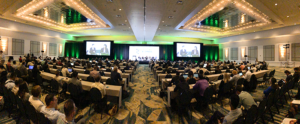
The Summit kicks off in Orlando.
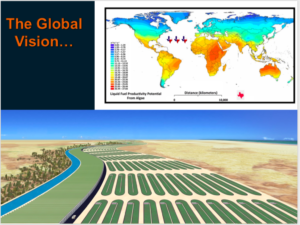
The event’s opening keynote by Dr. Charles Greene of Cornell University highlighted new research that demonstrates how the remarkable abilities of algae to grow fast, absorb carbon dioxide, and ease pressures on water and land use can help meet some of the most critical goals around climate change and global ecosystem preservation. Greene’s presentation examined the latest production potentials to conclude that the use of algae agriculture for food and energy instead of terrestrial crops could:
Produce millions of gallons of liquid hydrocarbon fuels required for jet aviation, heavy vehicles, marine shipping and other applications that will be difficult to electrify,
Produce the protein necessary to feed a global population approaching 10 billion people,
Conserve one fifth of global freshwater consumption,
Conserve one third of wild harvest fisheries,
Release nearly 3 million square kilometers of cropland for reforestation,
Decrease land use, and in combination with the decrease in fossil carbon emissions, account for a total reduction of approximately one quarter to one third of annual CO2 emissions by 2040.
Dr. Greene’s presentation envisioned a global algae cultivation industry.
The pressures on global food, energy and water supplies were a common theme on the first day of the Summit, but the need to develop products that meet the everyday demands of consumers was a lesson that some of the industry’s current leaders felt was just as important to ensure algae technologies and products become successful.
A plenary panel titled “Algae in Food and Feed Going Mainstream” featured some of the leaders in micro- and macro-algae supply chains, including Corbion, BioMar, Bluglacier, NBO3 Technologies, Blue Evolution, and Algama. All agreed that as new products enter the market it will be necessary to leverage the sustainability advantages of algae, but also acknowledge the realities of market demand.
Alvyn Severian, founder of Algama, a developer of algae-based foods, said his company’s priorities for a new product start with taste, but also include health, sustainability and pricing characteristics. “Our products must taste good or consumers will not buy them,” said Severin.
The Summit’s “Food and Feed Going Mainstream” panel.
A second keynote introduced Summit attendees to one of the largest sectors of the U.S. economy: agriculture. Roger Johnson, president of the National Farmers Union discussed some of the implications of new algae provisions in the 2018 Farm Bill. The legislation that was signed into law late last year acknowledged algae for the first time as a crop, alongside corn, soy and others.
Johnson highlighted a long history among farmers working with programs that incentivize new technologies for carbon capture, emissions reductions, water conservation, and land preservation–all big advantages that come with advanced algae cultivation.
“There’s always a frustration that change happens slowly, but new technology advances and political pressures are changing that,” said Johnson.
The Algae Biomass Summit continues today and tomorrow with sessions covering technical advances, breakthroughs in biology and production, new products and markets, and policy developments. The Summit concludes on Thursday with site tours of Valensa International’s CO2 extraction technology and a carbon capture and algae cultivation demonstration at the Orlando Utility Commission’s Stanton Energy Center.
On September 25 and 26, 2019, the U.S. Department of Energy’s Energy Efficiency and Renewable Energy’s (EERE’s) Bioenergy Technologies Office will host a workshop to identify data and R&D needs to enable the use of dedicated energy crops and algae for restoring water quality and enhancing soil health, while creating a new feedstock supply for the bioeconomy. Participants will discuss the current state of technologies relevant to both terrestrial and algal biomass, as well as the potential for these technologies to reverse environmental degradation and provide important ecosystem services. If successful, these technologies have the potential to increase availability and reduce costs of bioenergy and bioproducts.
The workshop will focus on the current state-of-the-art and R&D needs pertaining to:
Using dedicated energy crops to improve water quality and soil health (e.g., enhanced soil carbon levels) and provide other benefits
Algae technologies including direct harvest of algal blooms, turf scrubbers, and macroalgae
Quantification and valorization of ecosystem services
Low-cost sensors and data management systems that enable production of dedicated energy crops and algae
Overcoming challenges of integrating biomass production for restoration with bioenergy feedstock supply chain needs
This workshop will be held at the Argonne National Laboratory in Lemont, IL.
Date and Time:
September 25: 8:00 a.m. – 5:00 p.m.
September 26: 8:00 a.m. – 12:00 p.m.
Location:
Argonne National Laboratory
9700 S. Cass Avenue
Lemont, IL 60439




 The
The 
 On September 25 and 26, 2019, the U.S. Department of Energy’s Energy Efficiency and Renewable Energy’s (EERE’s) Bioenergy Technologies Office will host a workshop to identify data and R&D needs to enable the use of dedicated energy crops and algae for restoring water quality and enhancing soil health, while creating a new feedstock supply for the bioeconomy. Participants will discuss the current state of technologies relevant to both terrestrial and algal biomass, as well as the potential for these technologies to reverse environmental degradation and provide important ecosystem services. If successful, these technologies have the potential to increase availability and reduce costs of bioenergy and bioproducts.