Congress Directs Millions to Algae and Seaweed R&D for 2022

On March 15, ABO’s efforts to build a robust foundation for algae and seaweed technology research in the United States scored another win as President Biden signed a $1.5 trillion omnibus spending package to fund the federal government through fiscal year 2022. 

Several federal agencies support research and development for algae in all 50 states, and this bill will determine how much of that funding is used in the coming year. Agencies that are funding algae research include the U.S. Departments of Defense, Energy, Agriculture, Transportation, the Interior, the Environmental Protection Agency, the National Science Foundation and the White House Office of Science and Technology Policy. The Biomass Research and Development Board’s Algae Interagency Working Group is an excellent resource to learn more about how this research is being coordinated.

At the Department of Energy (DOE) alone, ABO advocated for millions in funding that will help meet two important goals for the algae and seaweed industries: new technology and new markets. By supporting technology development that includes new science, but also accelerates projects that can get algae & seaweed production to commercial scale, we can create the conditions for new and sustainable economic growth based on these exceptionally productive crops. 

The DOE’s funding includes: 

  • $40 million allocated to DOE’s Bioenergy Technologies Office (BETO) for algae technology and commercialization R&D.
  • $8 million allocated to DOE’s Fossil Energy Office for algae R&D related to carbon capture and use. This is the third year that this office will be dispersing funds to projects that can demonstrate new approaches to carbon capture, utilization and sequestration with algae. 

These are great results for continued research that can unlock the potential of algae, and are only part of the picture when it comes to bipartisan support for federal research. 

ABO will continue our efforts to advocate in Congress and elsewhere for this kind of research. 

We will also be working closely with our partners to build the markets for algae-derived products and services. With a coordinated effort we can make algae and seaweed a sought-after solution for markets that need sustainability, performance and cost improvements. 

Need help learning about federal funding opportunities for algae and seaweed? Reach out to ABO! Our membership is a network of professionals with insight into upcoming opportunities, the application process, partnership coordination and more. 
Submit an Abstract to the Algae Biomass Summit

This Friday, April 15, 2022 is the last day to submit abstracts for the virtual 2022 Algae Biomass Summit and also receive priority scoring by the event’s review committee. Join hundreds of attendees this October 3-28 to share milestones, make new connections, and plan for the future of the microalgae and seaweed industries.

Abstracts for speaking, poster presentations and even entire panels are welcome in each of the Summit’s topical tracks:

  • Strain isolation, development, and characterization
  • Cultivation and harvesting practices; Production R&D
  • Downstream processing and process economics
  • Commercial markets and product development
  • Resources and Environmental Aspects (including regulations and education)

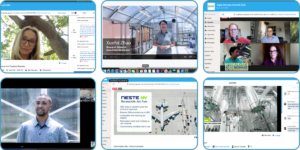
The Summit’s virtual format allows for participation from hundreds of attendees all over the globe, unprecedented networking opportunities, and recorded content that can be reviewed for months after the event concludes.

A $50 discount on early bird registration is available for students and postdocs that submit abstracts before the priority deadline of April 15.

Submit your abstract at the Summit’s website.

Panel Proposals Welcome

Virtual Summit screenshots

Bring your idea for a panel to explore a critical topic facing the algae and seaweed industries. You can propose up to five speakers for a session on the Summit’s agenda.

Once accepted, panel speakers will be asked to submit separate abstracts for their presentations.

Abstract Timeline

Feb 15, 2022: Call for abstracts opens
April 15, 2022: Abstract submission deadline to receive priority scoring
June 6, 2022: Abstract acceptance notification begins
October 3, 2022: First day of the Summit

Recognizing Leadership

At the Summit the Algae Biomass Organization will also announce awards for leaders in the algae industry, including: 

ABO’s Algae Industry Awards, which honor outstanding leaders, companies and innovations that are at the forefront of efforts to develop new technologies and commercial markets for renewable and sustainable products derived from algae. Nominations will be accepted in September 2022. 

Young Algae Researcher Awards, which recognize student scientists for their contributions to the fields of algae biology and engineering. Cash prizes are awarded to the top three in each category. 

See you at the #algae2022!

Visit the Summit’s website to learn more.


Watch ABO’s Workshop: Algae in Aquafeed – Opportunities, Barriers and Challenges

On March 5, 2022 ABO hosted a virtual and in-person workshop in San Diego to explore how the world’s aquaculture industries can use macroalgae (seaweeds) and microalgae to improve sustainability and productivity.

More than 60 people from all over the world participated, and great progress was made to identify the potentials and challenges for algae in aquaculture production, ecosystem services, and economics.

Several industry leaders focused their presentations on the current state of research for algae in food and feed applications. They included representatives from Corbion, Global Algae Innovations, UC Santa Cruz, MicroBio Engineering, the University of Connecticut, and Algae4All

Additional technoeconomic and sustainability topics were covered in presentations from the Scripps Institution of Oceanography, the National Renewable Energy Laboratory, and B&D Engineering and Consulting

Representatives from Conservation International, the Environmental Defense Fund, Veramaris, the University of Arizona, Zeigler and the Norwegian food institute Nofima explored how algae could further be included in aquafeeds, as well as what barriers and challenges need to be addressed.

We are posting the video below for those that missed the presentations and discussions.

A full report on the workshop’s proceedings will be issued by ABO in the summer.

Hawaii Embraces the Cultural Role of Seaweed by Declaring 2022 the “Year of the Limu”

Last month Hawaii’s Governor David Ige signed a proclamation declaring 2022 the Year of the Limu, a culmination of efforts by native advocates and organizations that seek to bring to light the enormous cultural importance that seaweeds can play. 

Limu is a Polynesian term for edible plants that come from the sea, such as seaweed and other types of algae. Limu has been an important component of cultures around the Pacific for centuries, widely revered for its environmental, nutritional and medicinal potential. This latest effort serves to rekindle and recognize Limu’s significance, especially as the world seeks nature-based solutions to challenges of climate change, food production and land use. 

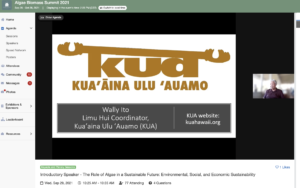
“This proclamation affirms that the State of Hawaii recognizes the importance of our work as advocates and educators in passing on traditional ecological limu knowledge to make our home a better place for future generations,” said Uncle Wally Ito of Kua’aina Ulu ‘Auamo, an innovative, community-based initiative focused on protecting the ecosystems and way of life in Hawaii.

Ito was a keynote speaker at ABO’s 2021 Algae Biomass Summit, where he presented a framework for ecological sustainability that includes how algae and seaweeds play a crucial role in Hawaiian life. This approach can be an inspiration to everyone in the ABO community as we build out opportunities for algae around the world.

ABO was a strong supporter of the legislative effort in Hawaii to make 2002 the Year of the Limu. As the trade organization for the industry, we deeply understand the value of these ancient plants as the foundation of a sustainable environment and as a vital nutritional and food source.  

The recognition by the State of Hawaii is a great milestone for the future of algae. ABO congratulates those that made it possible! 

More coverage of Hawaii’s “Year of the Limu” can be found here:

Algae in Advanced Wastewater Treatment

Algae is often considered a harmful consequence of polluted water, but new technologies are finding ways to harness the power of algae to provide solutions to water quality challenges around the world. Algae-based water treatment takes advantage of the ability of algae to grow quickly and absorb pollutants under carefully controlled conditions. The approach is offering communities a sustainable, cost-effective and energy efficient way to treat wastewater from cities, farms and industrial settings. 

As these new technologies enter the market they are presenting water treatment plant operators, local water districts, agricultural operations and industrial water facilities new options that closely align with environmental, social, and corporate governance (ESG) goals as well as strict regional water quality requirements. 

Algae Brings ESG Advantages to Wastewater Treatment

Algae-based wastewater treatment can provide a natural, climate positive solution to municipal, industrial and agricultural customers. Among the most powerful potentials is these systems’ ability to remove nutrients like nitrogen and phosphorus very efficiently, even better than many standard bacterial and or chemical treatment processes. Nitrogen and phosphorus are facing new and more stringent discharge limits by regulatory bodies worldwide. They are also difficult to treat in traditional plants and often require energy intensive and costly chemical inputs.

Yet performance is not the only advantage using algae in water treatment; there are economic benefits as well. Algae-based treatment produces a valuable algal biomass that can be sold in a number of markets, creating a new revenue stream for treatment facilities. These markets include slow release organic fertilizer or as bio-based inputs for consumer products like bioplastics and foams. In contrast, bacterial or chemical processes produce a sludge that only adds a disposal cost to operations. 

Algal biomass can also serve as a potential carbon credit; for every ton of algae produced, about two tons of carbon dioxide can be captured from the atmosphere

Perhaps most importantly, algae-based wastewater treatment systems can use less energy than traditional biological treatment processes, which require huge air blowers to create an oxygen-rich environment to allow for bacterial treatment. 

From Innovation to Commercial Success

Why is algae-based water treatment attracting more interest? A number of technology innovations are making these applications successful in real-world settings. One of them has been introduced by ABO member Gross-Wen Technologies (GWT), based in Slater, Iowa. 

GWT’s patented Revolving Algal Biofilm (RAB) treatment system utilizes an algae biofilm to treat wastewater. As the algae grows on the biofilm, nutrients (N and P) are removed from the wastewater. The resulting algal biomass can be used to create a variety of products, and helps generate revenue to offset the operational costs of the system. 

Since first developed at the University of Iowa, GWT’s technology has has been shown to be a cost effective and sustainable option for municipal and industrial wastewater treatment. 

One installation is in GWT’s headwaters city of Slater, Iowa, a growing community located between two large economic hubs (Des Moines and Ames, IA). The city’s existing water treatment plant has been able to meet the demands of the community, but it is now facing more stringent permitting requirements for the discharge of nutrients and other pollutants. In exploring its options the city worked with GWT to evaluate algae-based water treatment and build a demonstration scale facility that could operate with the city’s existing aerated lagoon wastewater treatment plant.

That demonstration was an impressive success. It validated that GWT’s treatment system is an effective technology to retrofit an aerated lagoon to achieve nutrient removal, and was also shown to potentially over $1 million in capital expenses, as well as a great deal in personnel costs. 

The city is now pursuing a commercial-scale RAB facility, with plant upgrades expected to be completed in Q4 of 2022. The upgrades are expected to treat the city’s full flow of wastewater, and meet the new, more stringent effluent requirements placed on the facility. 

GWT’s innovative technology, and that of other algae-based water treatment options, can also be integrated into anaerobic digestion facilities and in many high strength wastewater industrial applications. This makes algae water treatment a unique approach for rural areas that have large water treatment needs but limited budgets. Algae is the cost-effective, nature-based solution to the kinds of challenges rural communities face. 

To date, GWT’s innovative technology has been deployed at pilot, demonstration and full-scale commercialization at municipal and industrial facilities throughout the upper Midwest (Iowa, Illinois, Wisconsin).  With this and other successes, GWT is poised for remarkable growth as it continues to expand its team and number of deployments across the United States. 

Of course, GWT is not alone in offering algae water treatment solutions, other providers include Clearas Water Recovery in the United States, and the LIFE ALGAECAN and MicroAlgae Biorefinery projects in Europe. 

What’s Next for Algae in Wastewater Treatment

There is an enormous opportunity to use this technology on a much larger scale.  There are 16,000 wastewater treatment facilities in the US alone, and many of them are facing increased pressures from new population growth and new water quality requirements. 

At the same time, nutrient loading in waterways is creating expensive ecological problems around the world. Too many nutrients from human activity can trigger harmful blooms of wild algae in waterways. These blooms can kill native species, disrupt local economies and have a significant human health impact as well.

The new water infrastructure that is needed to meet these challenges is often expensive for communities, farmers and businesses. They can also be time-consuming to install, and require new expertise to operate. That is not so much the case with many of the approaches that use algae. 

​​Algae-based wastewater treatment offers the most sustainable, cost-effective and energy efficient way to treat both municipal and industrial wastewater.  Algae is “nature’s way” of addressing nutrients and removing them from water.  As our world looks for sustainable, climate positive solutions, algae-based treatment is the means to the positive end point. 

In the end, what’s next for algae in wastewater treatment may be in the hands of the communities that are seeking solutions. There is still room for technological improvements, but with the successes we’ve seen so far, the most important decision will be how water treatment operators want to balance the need for clean water with economics and sustainability.