Initial Phase of World’s First Green Crude Farm Completed On Time and On Budget
COLUMBUS, NM, (August 27, 2012) – Sapphire Energy, Inc., one of the world leaders in algae-based green crude oil production, today announced the first phase of its Green Crude Farm, the world’s first commercial demonstration algae-to-energy facility, is now operational. Construction of this first phase, which began on June 1, 2011, was completed on time and on budget. When completed, the facility will produce 1.5 million gallons per year of crude oil and consist of approximately 300 acres of algae cultivation ponds and processing facilities. By reaching this key milestone, Sapphire Energy is on target to make algae-based Green Crude a viable alternative fuel solution capable of significantly reducing the nation’s need for foreign crude oil, which will serve as the blueprint for scalable algae biofuel facilities globally.
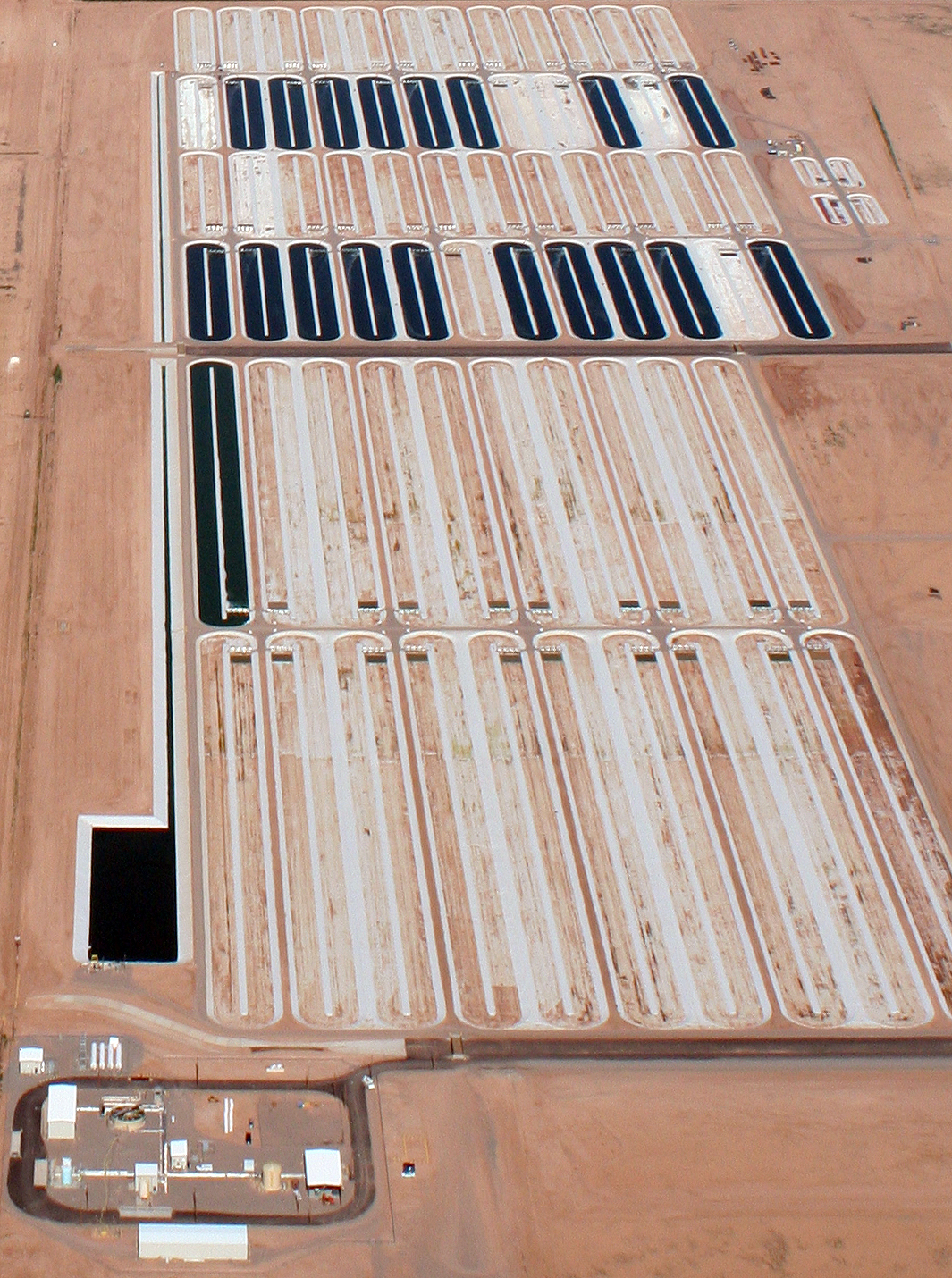
The Green Crude Farm, also known as an Integrated Algal Bio-Refinery, was funded with both private and public funds, including $85 million in private investment from Sapphire Energy backed by a USDA loan guarantee and a $50 million grant from the US DOE. Today, the cultivation area consists of some of the largest algae ponds ever built with groupings of 1.1 acre and 2.2 acre ponds which are 1/8 of a mile long. The initial phase also includes all the necessary mechanical and processing equipment needed to harvest and extract algae and recycle water for the 300 acre Green Crude Farm.
In March, the first seeding of ponds with algae, otherwise known as inoculation, took place and a series of “shakedown” tests began to ensure that all systems are working as planned. Today, the farming operations are exceeding Sapphire Energy’s internal productivity goals in terms of biomass yield, demonstrating that large scale cultivation is possible and much larger cultivation systems can be implemented with the proper agronomic processes in place. The company harvested its first crop in June without any system difficulties and has since harvested 21 million gallons of algae biomass totaling 81 tons. Next, the Green Crude Farm is preparing to transition its operations to a winter variety of algae while continuous cultivation, harvest and extraction activities continue.
“Bringing our Green Crude Farm online is not only an important accomplishment for Sapphire Energy, but a critical step toward a viable alternative energy future,” says Cynthia ‘CJ’ Warner, CEO and chairman of Sapphire Energy. “What was once a concept is now becoming a reality and model for growing algae to make a renewable crude oil for energy. We look forward to sharing our progress as the Green Crude Farm moves to its next stage.”
Sapphire Energy partnered with AMEC Project Engineering, who coordinated with 16 New Mexico based contractors, to complete the first phase of the Green Crude Farm during 12 months of active construction. As of today, Phase One of the project has reached the following milestones:
Construction: Completed on time and on budget
Unit Operations: Conducting all united operations, including cultivation, harvest and extraction in a continuous process
Cultivation: biomass productivity exceeding the company’s goals
Harvest: Successfully harvested 81 tons of biomass
In building the Green Crude Farm:
634 full-time equivalent employees were hired throughout the entire construction phase
$16 million was directly invested with local New Mexico contractors
Sapphire Energy will continue to conduct “shakedown” testing, as well as operate and expand farming operations over the winter, as the facility is commissioned into 2013. By the end of 2014, the Green Crude Farm will produce 100 barrels of Green Crude per day. The commercial demonstration project is expected to prove “commercial” techno-economics, and Sapphire’s commercial scale Green Crude facility.
About Sapphire Energy
San Diego-based Sapphire Energy is pioneering an entirely new industry – Green Crude – production with the potential to profoundly change America’s energy and petrochemical landscape for the better. Sapphire’s products and processes in this category differ significantly from other forms of biofuel because they are made solely from photosynthetic microorganisms (algae and cyanobacteria), using sunlight and CO2 as their feedstock; are not dependent on food crops or valuable farmland; do not use potable water; do not result in biodiesel or ethanol; enhance and replace petroleum-based products; are compatible with existing infrastructure; and are low carbon, renewable and scalable. Sapphire has an R&D facility in Las Cruces, New Mexico, and is currently building the first Integrated Algal BioRefinery in Columbus, New Mexico. For more information, visit www.sapphireenergy.com or
Concentrated algae ready for extraction, being poured from a storage tank.
The commercialization of algae biomass for fuel production took a giant leap today with the announcement that Sapphire Energy’s Green Crude Farm, the world’s first commercial demonstration algae-to-energy facility, is now operational in Las Cruces, New Mexico.
The first phase of Sapphire’s large outdoor production facility, which includes harvesting and extraction equipment along with the racetrack-shaped ponds, has produced 21 million gallons of algae biomass since June. Algae biomass contains oils, proteins and carbohydrates that can be processed into fuels, feed, fertilizers and many other products.
The enormous production potential of this first phase of the project is only the beginning. By the end of 2014, the facility will produce 100 barrels of Green Crude per day.
Sapphire’s announcement notes that the demonstration is on-budget and that construction and production milestones are being met on schedule. In the coming weeks operators will be switching the strain of algae in the ponds to one that is better suited to growing in winter months. The switch will show that year-long growth cycles can keep a steady flow of biomass supplied to the market.
Successful demonstrations like this are going to play a key role in deploying algae technologies into the marketplace. Today’s announcement is one more example that when it comes to making fuels from algae, a new industry can provide the kind of jobs and domestically produced fuels we need. Sapphire’s press release about this one project hints at some of the potential:
634 full-time equivalent employees were hired throughout the entire construction phase
$16 million was directly invested with local New Mexico contractors
Most industry insiders believe that once commercial facilities like this come online, it will only be a matter of time before they become the model for hundreds of algae farms and fuel production facilities across the United States.
With Sapphire Energy’s impressive production schedule, and so many other companies aggressively pursuing their own algae technologies, the day we are all putting algae-derived fuels into our tanks is approaching very quickly.
An aerial view of Sapphire Energy’s Green Crude Farm in Columbus, NM. There are currently 100 acres of ponds developed and the site is approximately one mile long by one-quarter of a mile wide.
The first event of the Summer of Algae II campaign was Monday in the country’s most dense center of algae research and commercialization: San Diego.
The San Diego Daily Transcript describes just how far along the industry is in California and more about the Summer of Algae campaign. Participants at Monday’s event hailed from Scripps Institution of Oceanography, UC San Diego, the San Diego Center for Algae Biotechnology (SD-CAB), Synthetic Genomics, General Atomics, Cellana and Sapphire Energy.
Jason Anderson, Vice President of CleanTECH San Diego, a non-profit that is working to position the region as a global leader in the cleantech economy, was also one of the speakers at the San Diego tour. In a blog post yesterday he adds some concrete examples of how regional collaborations can foster an industry as well as the local economy:
“Through a close collaboration, we have designed programs that not only support the biofuels and industrial biotech industry today, but will continue to evolve to meet industry needs as it matures. To date, we have trained more than 300 workers and over one-third of those trained are now employed in the industry. Just as the region’s research institutions and private sector companies continue to gain momentum and investment for their advances, EDGE’s cutting edge curricula and training programs are being considered for adoption by institutions all over the world.”
The example of San Diego shows how regional initiatives can help communities benefit from new and growing industries. The challenges that algae can address around fuel supplies, food production and water usage make it particularly attractive. Other states are already reacting to the impressive milestones that algae companies are achieving on a regular basis. Ohio and Arizona easily passed bi-partisan legislation that puts algae on equal footing with other agriculture, for example, and others are likely to follow.
The Colorado Center for Biorefining and Biofuels (C2B2) and Solix BioSystems had their own Summer of Algae event at the Colorado School of Mines yesterday. Researchers and company executives met with local and federal official to show the latest algae research activity within Colorado, discuss commercialization prospects, and answer questions regarding the emerging biofuels industry in the state.
Research scientists and company officials discussed the role their technology can play in creating jobs and economic growth in Colorado as well as the larger role the technology can play in addressing global fuel and food issues.
Several Denver-area news stations aired segments about the tour. Check out the story on CBS Channel 4:
The Summer of Algae continues in Colorado when the industry convenes for the Algae Biomass Summit in Denver, September 24-27. Hope to see you there!
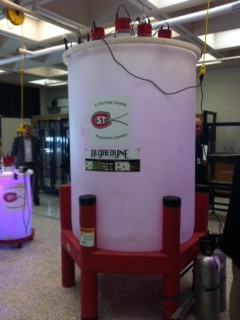
The Summer of Algae II is off to a great start. The day after a kickoff event in San Diego it was time for St. Cloud State and algae start-up Algaedyne to partner in Minnesota for an event that showed off that state’s latest research and algae commercialization projects.
Local and national elected officials were on hand to learn how research and business-academic partnerships are coming together to find the best ways algae can be a sustainable source of fuels, food, feed, and chemicals.
The Summer of Algae II is a campaign to raise awareness about algae’s potential and the industry’s progress toward commercialization. You can read more about the campaign in this press release, and about future events in this blog post.